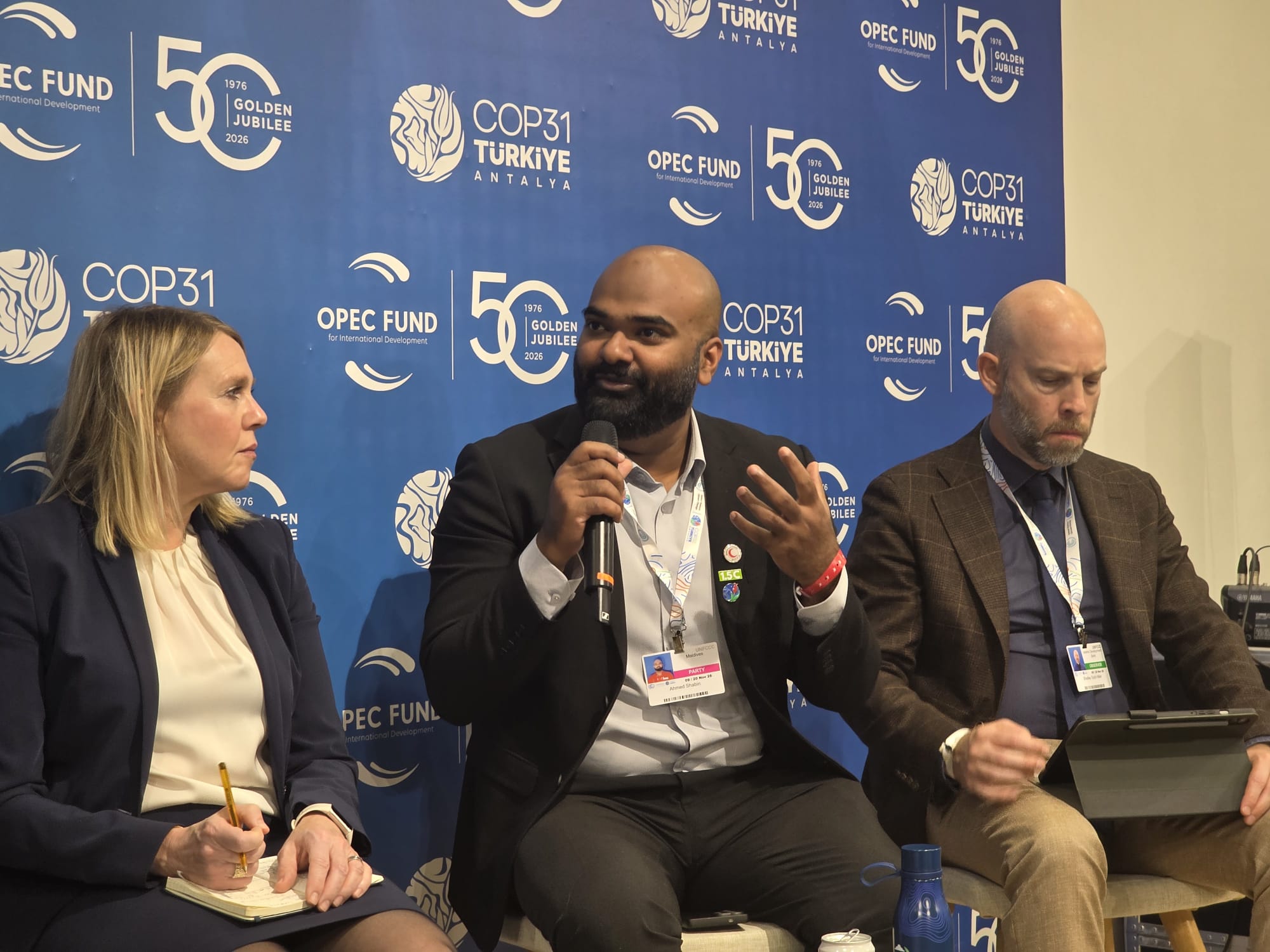
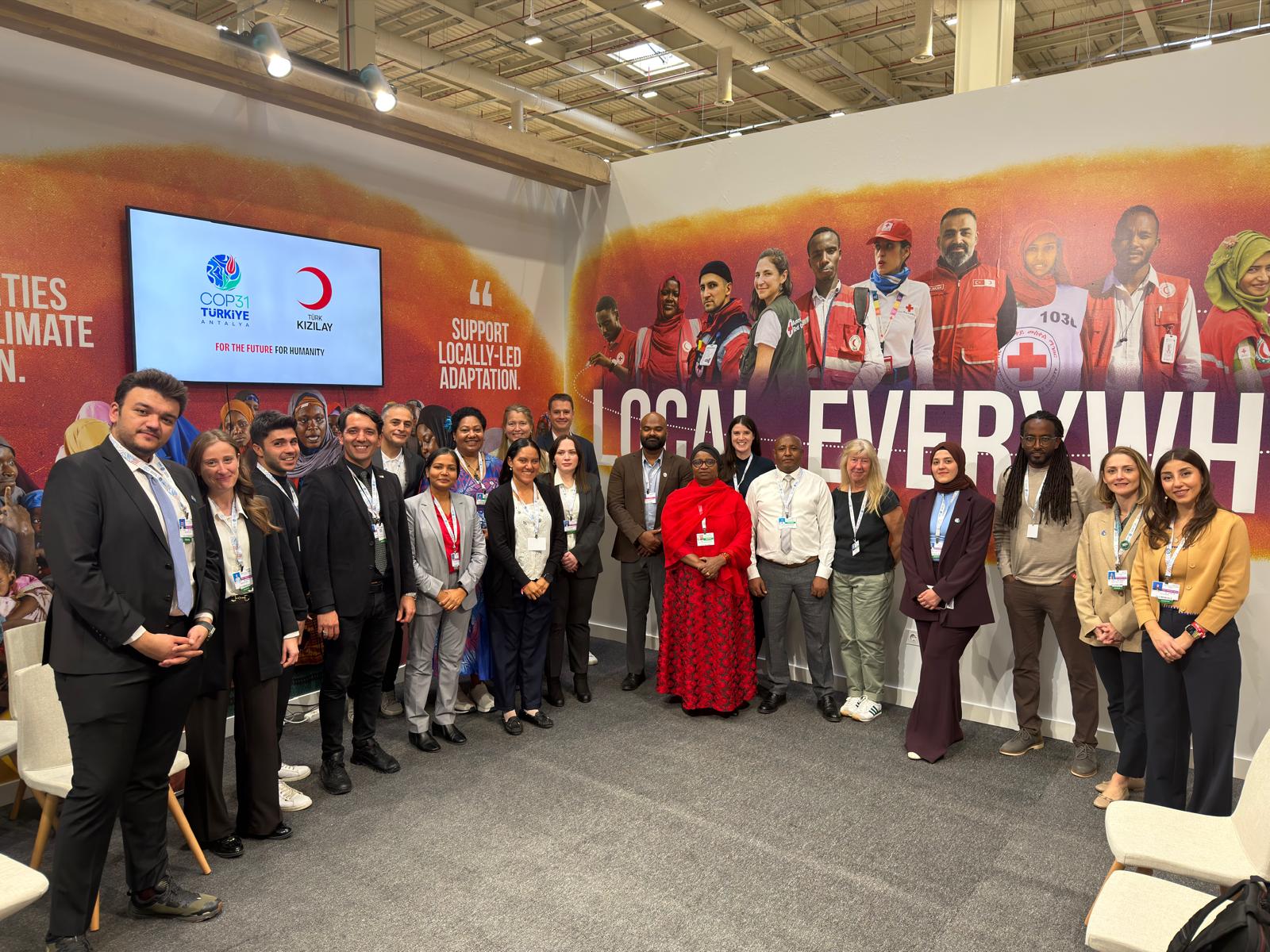
The Maldivian Red Crescent (MRC) took part in COP31 as part of the delegation of the International Federation of Red Cross and Red Crescent Societies (IFRC), with Secretary General Ahmed Shabin representing MRC. COP31 was an opportunity to bring the Maldives’ experience to the global stage, and to take home lessons that will help MRC better serve its communities.
At the heart of what he shared is a conviction that runs through the IFRC’s call to action for COP31: climate action is strongest when it reaches the local level, when finance moves with fewer intermediaries, and when the communities facing these risks are at the centre of the response. The IFRC urged world leaders to scale up investment to protect communities from the growing humanitarian impacts of climate change, around three priority areas: more climate finance reaching the people most affected, health at the centre of national adaptation plans, and action on heat. Its call also stresses that early action makes early warning systems work. The case rests on a long-standing gap, as less than 10 per cent of global climate adaptation finance reaches the local level.
He carried this message into three sessions: “Turning Networks into Lifelines: Financing Cell Broadcast for Climate Resilience and Early Warnings for All,” with the International Telecommunication Union (ITU); “From Cascading Risk to Financing Climate-Resilient Returns: Early Action and Anticipatory Action in Africa and Beyond,” with the Risk-informed Early Action Partnership (REAP); and a session on extreme heat with the United Nations Office for Disaster Risk Reduction (UNDRR). The message was a familiar one for the Secretary General, who has represented MRC with the IFRC delegation at COP28, COP29 and the 4th International Conference on Small Island Developing States, each time making the case for investment in early warning and for the voice of small island states.
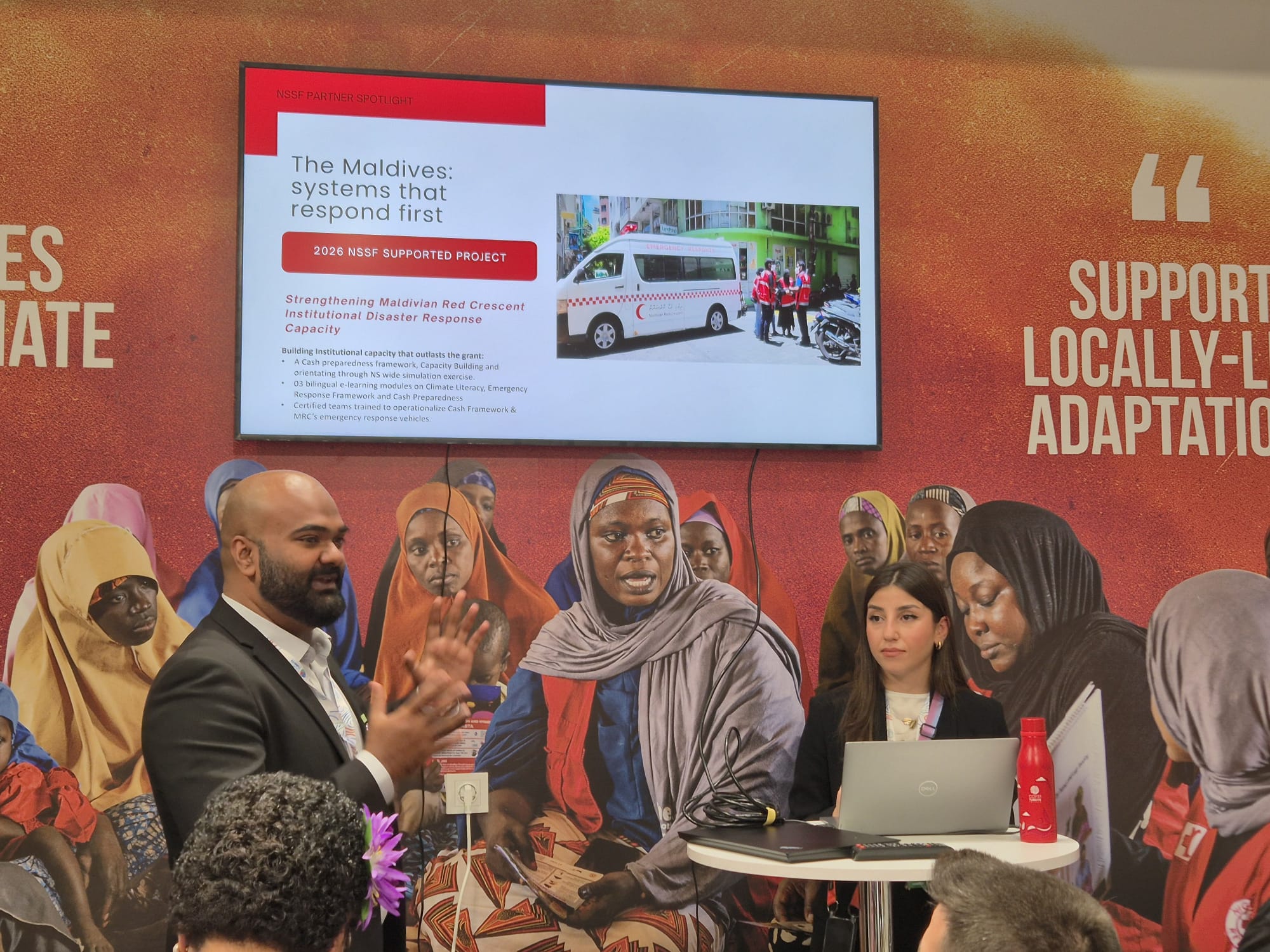
These conversations reflect work now under way in the Maldives. Through the TRACT Project, led by the Ministry of Climate Change, Environment and Energy under the Green Climate Fund in partnership with the United Nations Environment Programme, the Government is bringing multi-hazard early warning to the country. MRC is proud to support this through its work on community preparedness, so that warnings reach island communities as action, not just information.
COP31 was also a chance to connect with sister National Societies from across the Movement, including Türk Kızılay, Fiji Red Cross Society, Belize Red Cross Society, Ethiopian Red Cross Society, Australian Red Cross, Suomen Punainen Risti, Cook Islands Red Cross Society and Røde Kors, sharing experiences and strengthening the bonds that make the global network stronger.
MRC thanks the IFRC for the opportunity to take part in COP31, and looks forward to carrying what it has learned into its work with island communities.