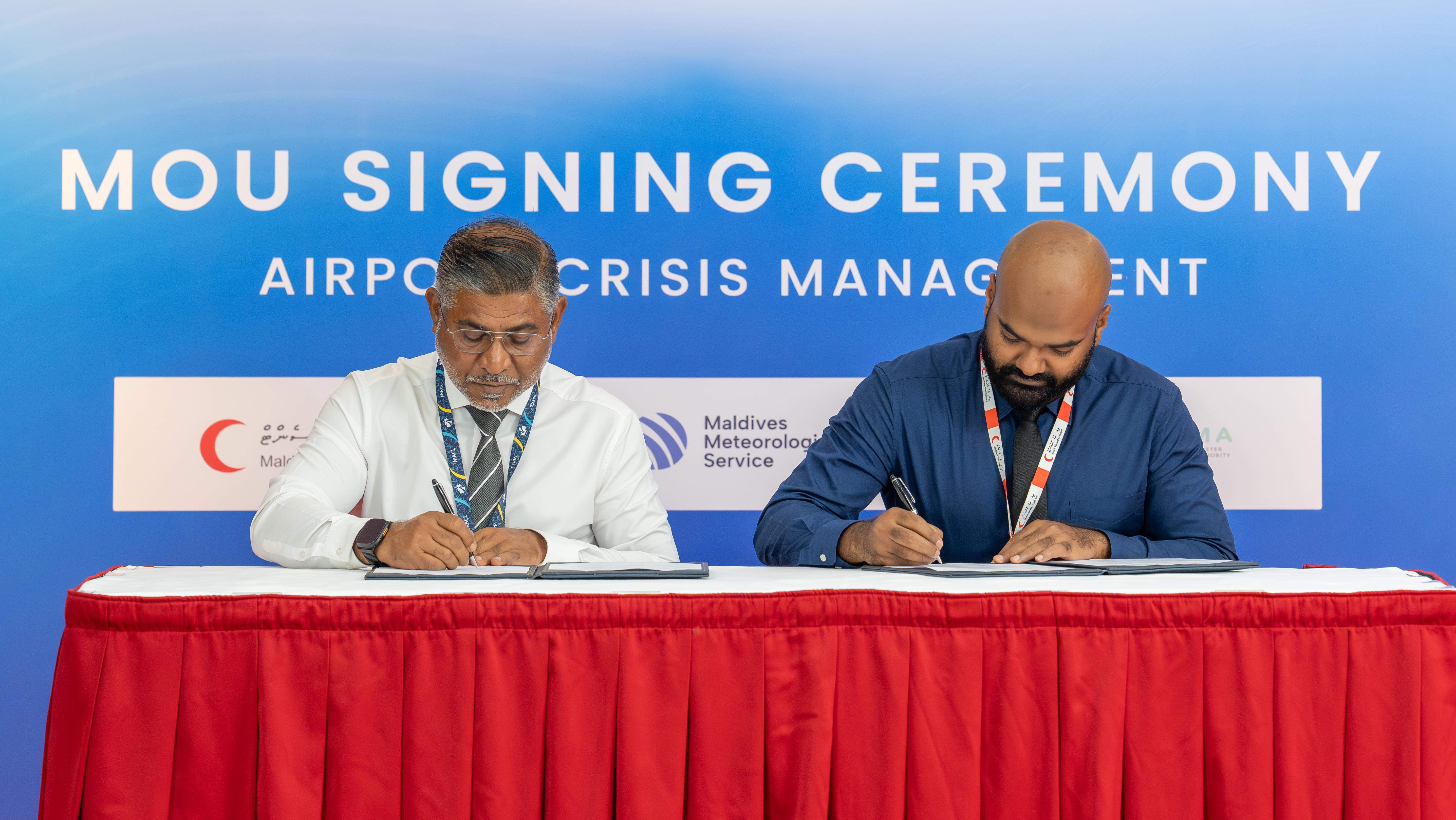
The signing took place at a ceremony during which MACL also signed MoUs with the National Disaster Management Authority (NDMA) and the Maldives Meteorological Service (MMS), collectively reinforcing the multi-agency framework for airport crisis management in the Maldives.
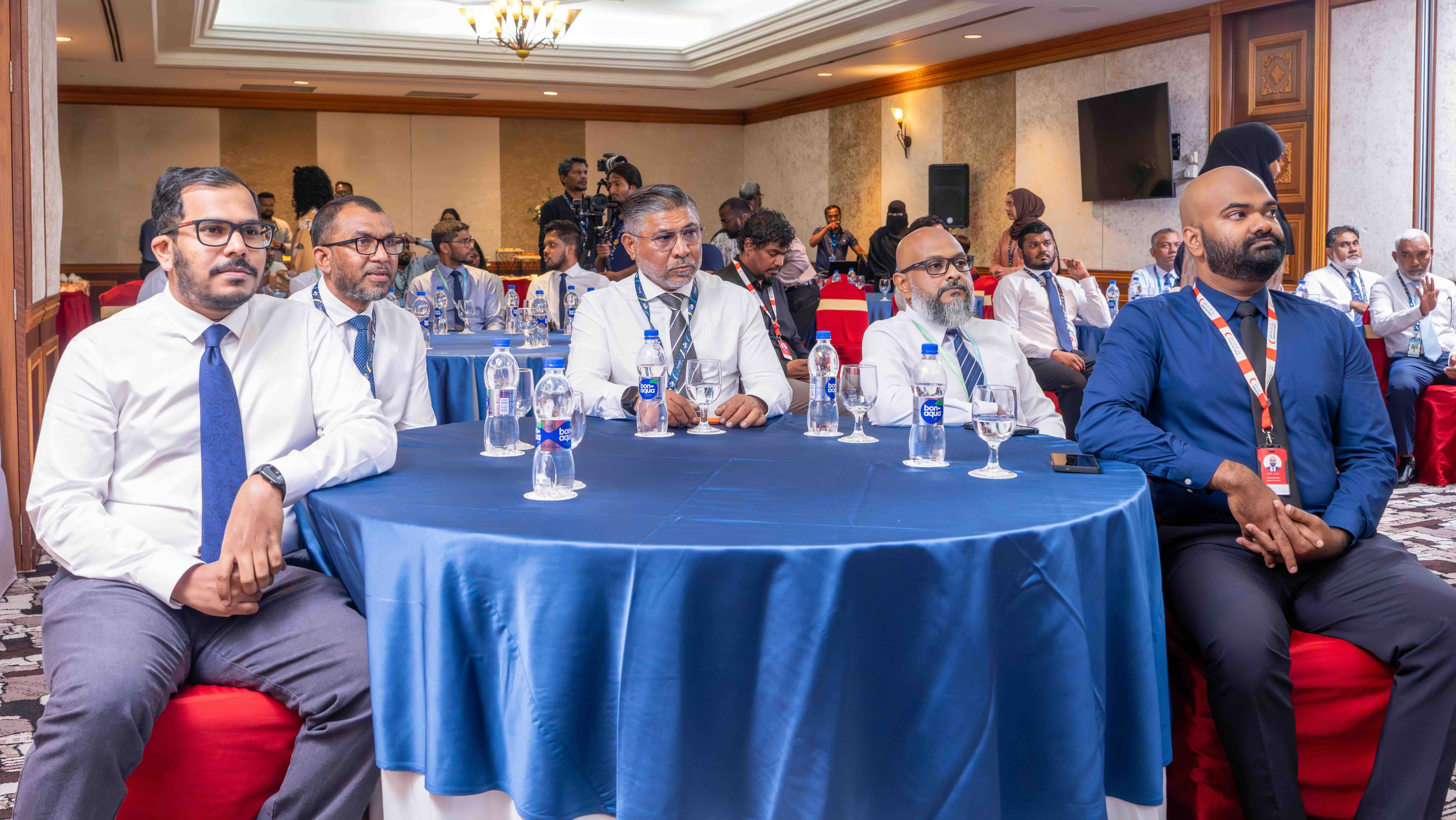
For MRC, the signing was not the beginning of a relationship, it was the formalisation of one. Speaking at the ceremony, MRC Secretary General Ahmed Shabin reflected on the depth of the partnership: "Today's agreement is not the beginning of our work together. It is the formalization of a partnership that has been in practice for over sixteen years since MRC's formation, built on trust and shared commitments." MACL was among the first organisations to recognise and invest in MRC's role during its formative years, an early institutional endorsement that helped establish MRC's credibility, build trust with key stakeholders, and lay the foundation for the organisation's growth as a national humanitarian society.

Over the years, the partnership deepened. More than 400 MACL staff members have undergone First Aid and Psychological First Aid training through MRC, and since 2011, MRC has participated in the Airport Full-Scale Emergency Exercise (AFEX) the largest coordinated multi-agency emergency response exercise in the country. These exercises have strengthened MRC's emergency response mechanisms, provided MRC volunteer response teams with hands-on experience under realistic conditions, and built the coordination and relationships that translate into effective action when real emergencies occur.
The MoU establishes a formal structure for this ongoing collaboration, covering all phases of crisis management at Velana International Airport, from preparedness and response through to recovery. Under the agreement, MRC commits to aligning its operations with the Airport Emergency Plan and Airport Security Contingency Plan, deploying specialised teams to deliver first aid, psychological first aid, and emergency relief services during declared emergencies and mass casualty incidents, and continuing to build MACL's capacity through training and awareness sessions. Both parties also commit to joint exercises, regular planning sessions, and after-action reviews ensuring continuous improvement and operational readiness across the partnership.
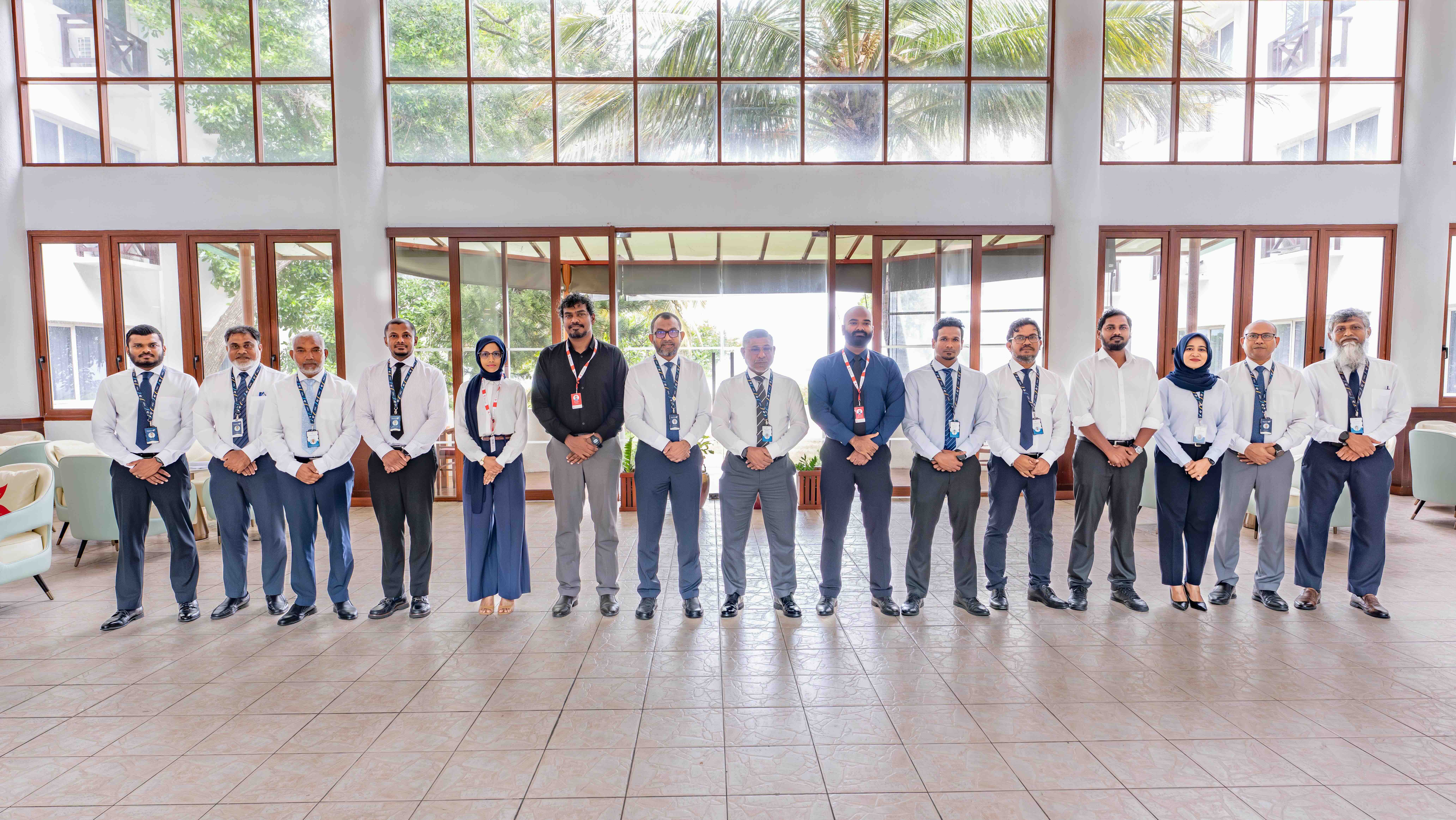
Emergency preparedness at the airport is a shared responsibility and this agreement is a formal commitment to that responsibility, built on sixteen years of partnership and a shared recognition that strength lies not in what any one organisation does alone, but in how effectively they work together when it matters most.