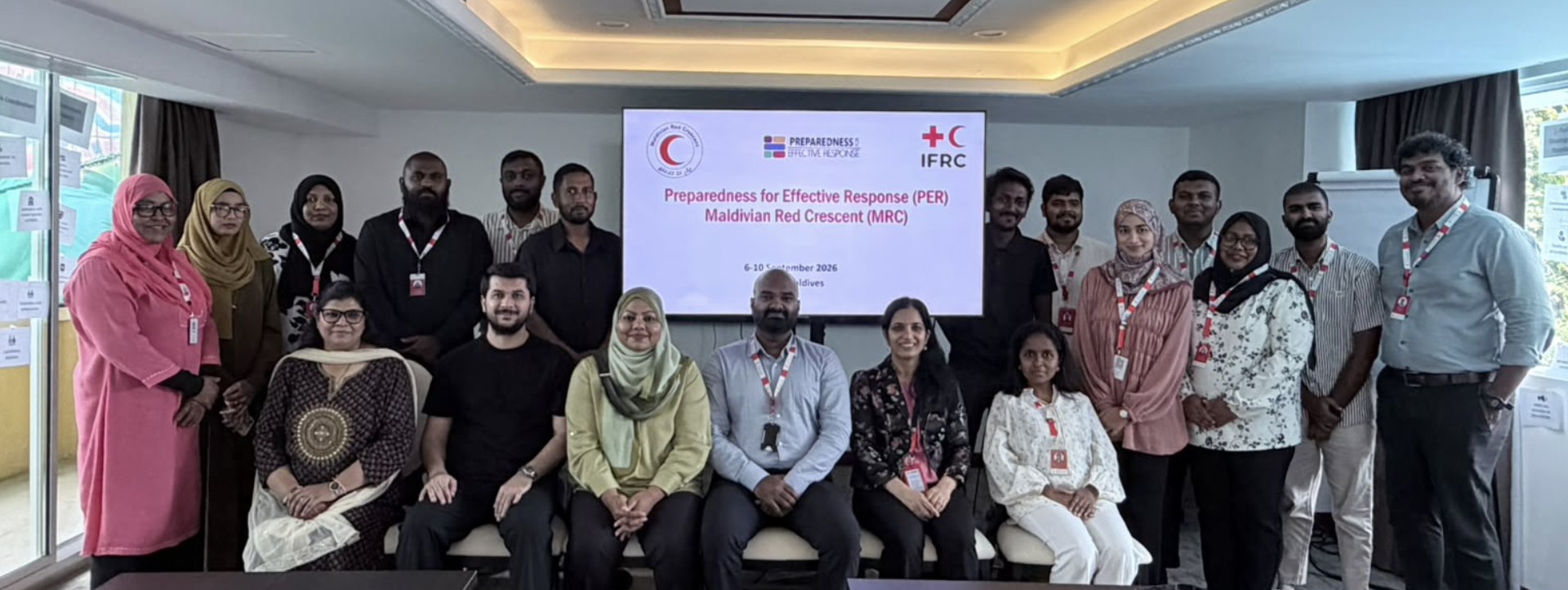
The process was guided by a facilitation team from the IFRC, bringing the breadth of MRC's network into one room. It was an opportunity to look honestly at how MRC prepares and responds as a National Society. Over five days, representatives from MRC Headquarters, Regional Offices, Units, and the Governing Board reviewed response capacity across a wide range of areas, drawing on experience and perspectives from across the organisation. From that process, key priorities were identified and used to shape a three-year MRC Preparedness Plan, setting out the activities, timelines, and responsibilities for the work ahead.
These priorities span a range of critical functions from strengthening MRC's emergency response procedures and community-based disaster preparedness work, to early action, cash-based support, safety and security, and logistics reflecting the full breadth of what it takes to respond effectively as a National Society.
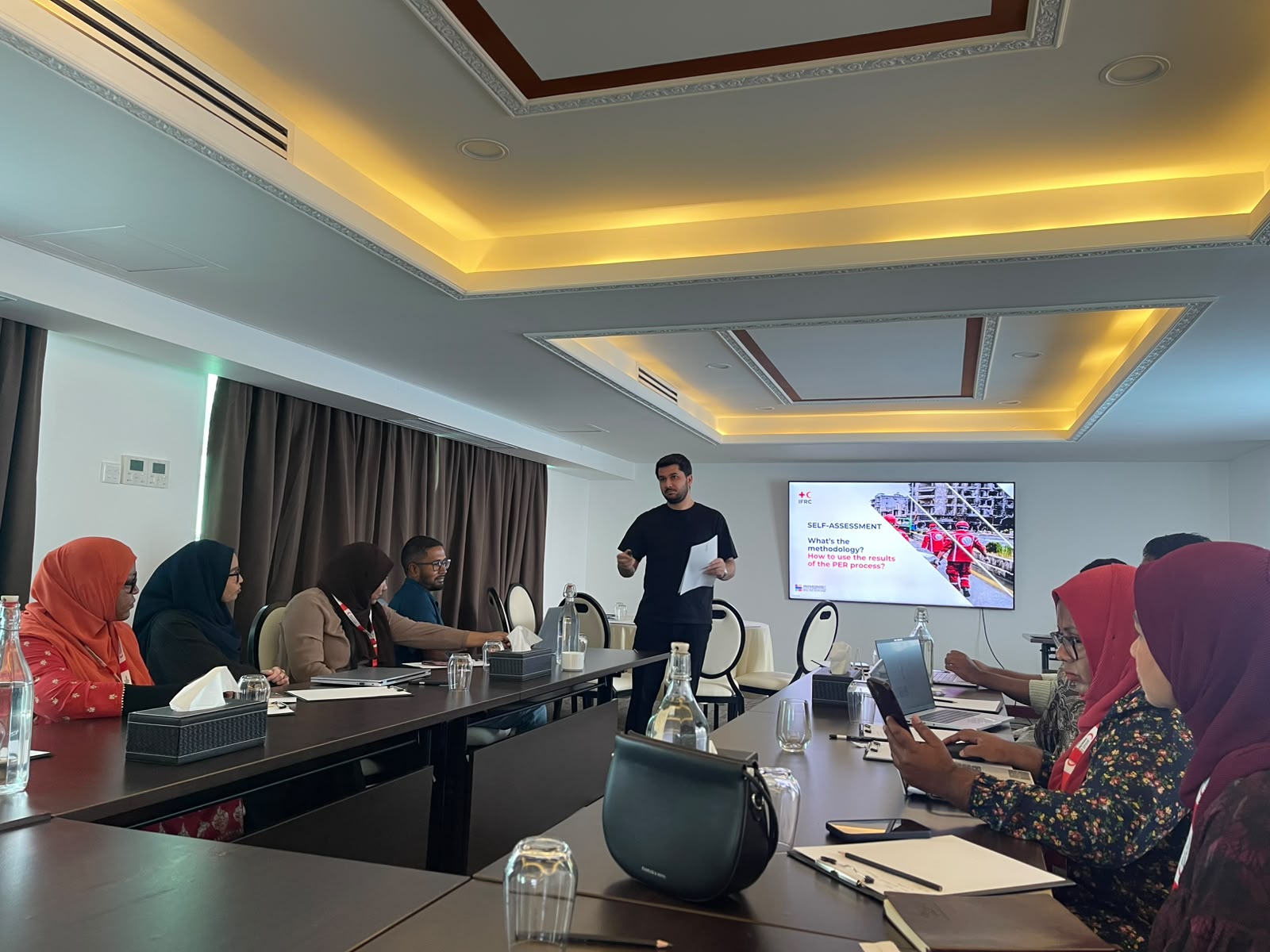
For a low-lying island nation like the Maldives, where communities are spread across atolls and increasingly exposed to flooding, sea-level rise, and extreme weather, the need for this kind of honest assessment is clear. The ability to respond when something happens rests on people who are already there, such as the volunteers embedded in island communities, who are often the first to reach those affected before any other support arrives.
This is how MRC operates, through a network of Units and volunteers present across the country, working alongside communities, local authorities, and national partners to deliver humanitarian services where they are needed most. The PER process was about ensuring that MRC is ready to support and strengthen that response by building the internal capacity and systems needed to back its volunteers and Units when it matters most.
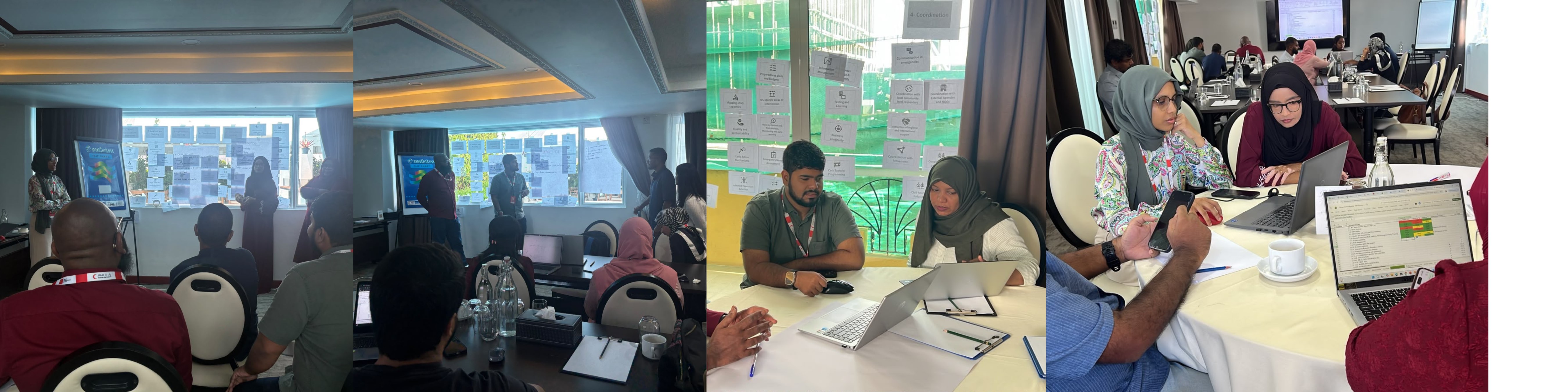
MRC thanks the IFRC for their partnership and guidance throughout the process, and to all MRC personnel for their active participation and the commitment they brought to every session. The work ahead is what this process was designed to enable, and MRC looks forward to putting the Preparedness Plan into action in the years ahead.