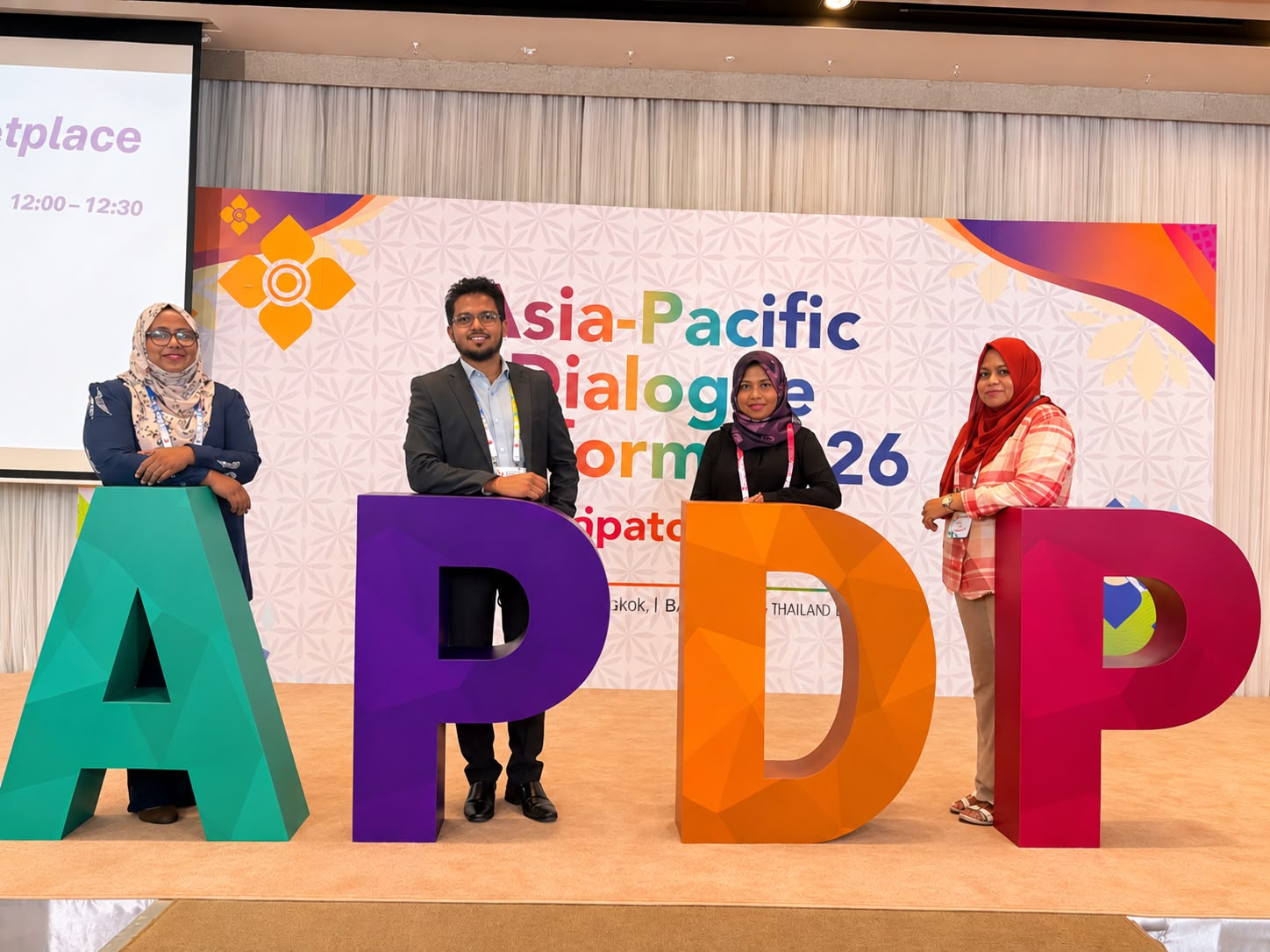
From 17 to 19 November 2026, the Asia-Pacific Dialogue Platform on Anticipatory Action took place in Bangkok, Thailand, under the theme “Eyes on the Horizon, Feet on the Ground: Powering Early Warning Systems and Scaling Anticipatory Action.” The Platform brought together governments, humanitarian organisations and partners from across the region to strengthen the links between early warning systems and anticipatory action.
The Maldives took part with a delegation that reflects how this work is done at home, together: the Maldivian Red Crescent (MRC), the National Disaster Management Authority (NDMA), the Maldives Meteorological Service (MMS) and the Ministry of Climate Change, Environment and Energy. Each holds a different part of the national early warning system, from forecasting and risk knowledge to national coordination and community preparedness, and being in Bangkok together was a chance to share that collective effort with the region.
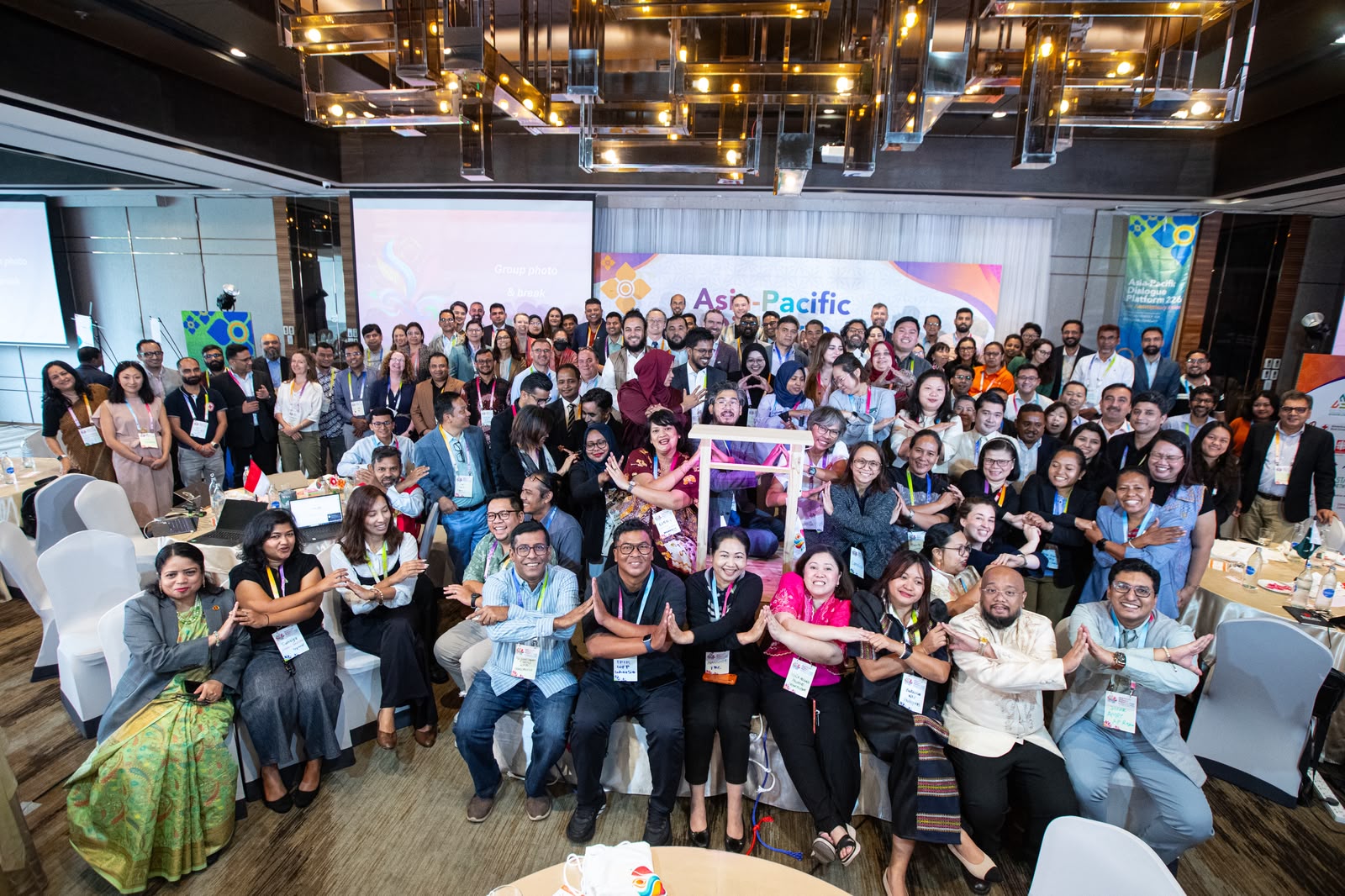
The Platform opened with a picture of a growing field. Anticipatory action has expanded significantly across Asia-Pacific in recent years, with the number of frameworks rising by 72 per cent between 2023 and 2025 to reach 169 frameworks in 17 countries. Discussions also looked at what is still needed, including greater harmonisation of forecasts, triggers and financing, stronger government-led coordination, and pre-arranged financing so that action can begin before a hazard strikes. At the centre of the conversation was a simple question: how to make the link between an early warning and early action more systematic, and how the communities working on early warning and those working on anticipatory action can work more closely together.
It is a question the Maldives has been working on at home, and the delegation brought that experience to the Platform in several ways. Alongside other participating countries and organisations, the Maldives delegation set up a booth, jointly prepared by MRC, NDMA, MMS and the Ministry of Climate Change, Environment and Energy, showcasing the work being done nationally to strengthen early warning and anticipatory action. The booth gave the delegation a chance to engage directly with participants from across the region, share the national approach and learn from others doing similar work.
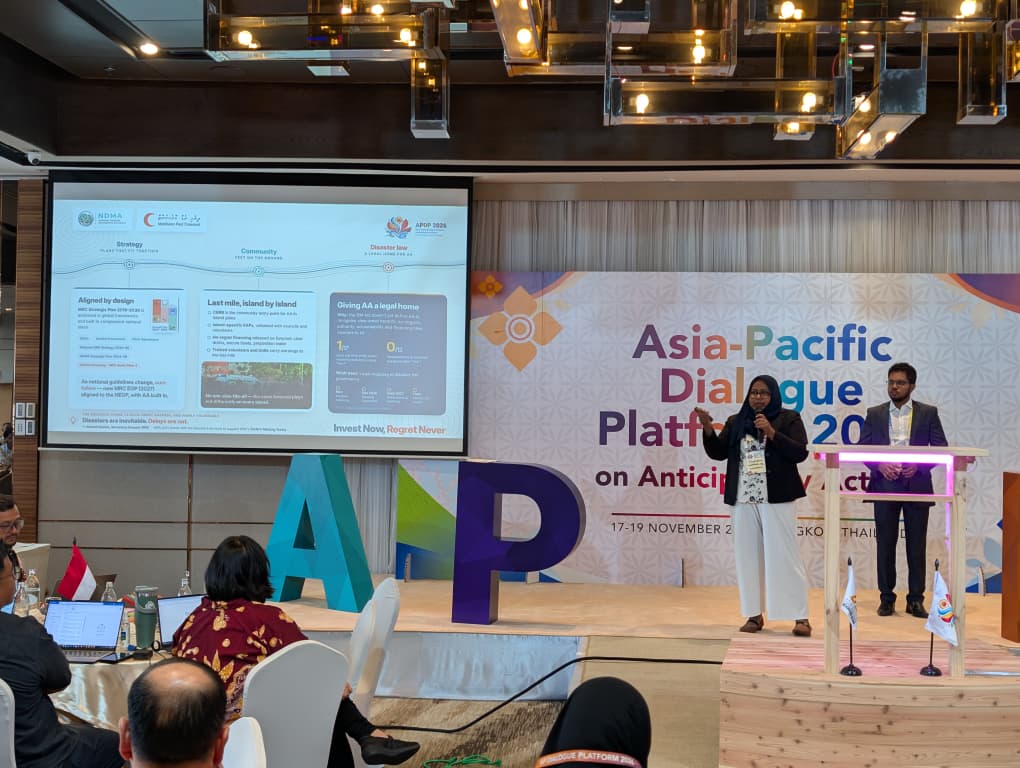
MRC and NDMA also took part in the ignite session “Act First, Regret Never: Institutionalising Anticipatory Action into Law & Policy”, presented by MRC's Faroosha Ali Naseer, MRC Regional Manager - Central Region and NDMA's Hassan Ziyau, Director, Disaster and sharing the national effort towards institutionalising anticipatory action and how it connects to the national early warning system and the Early Warning for All roadmap.
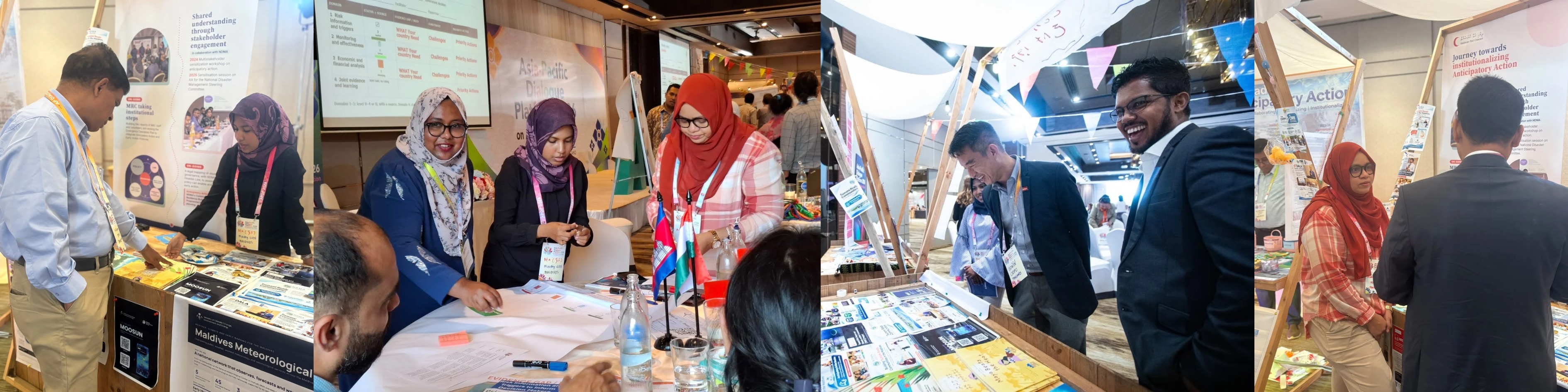
MRC also also took part in the Movement engagement session, where National Societies and Red Cross Red Crescent partners discussed their work on anticipatory action, promoting the exchange of experience and knowledge across the network.
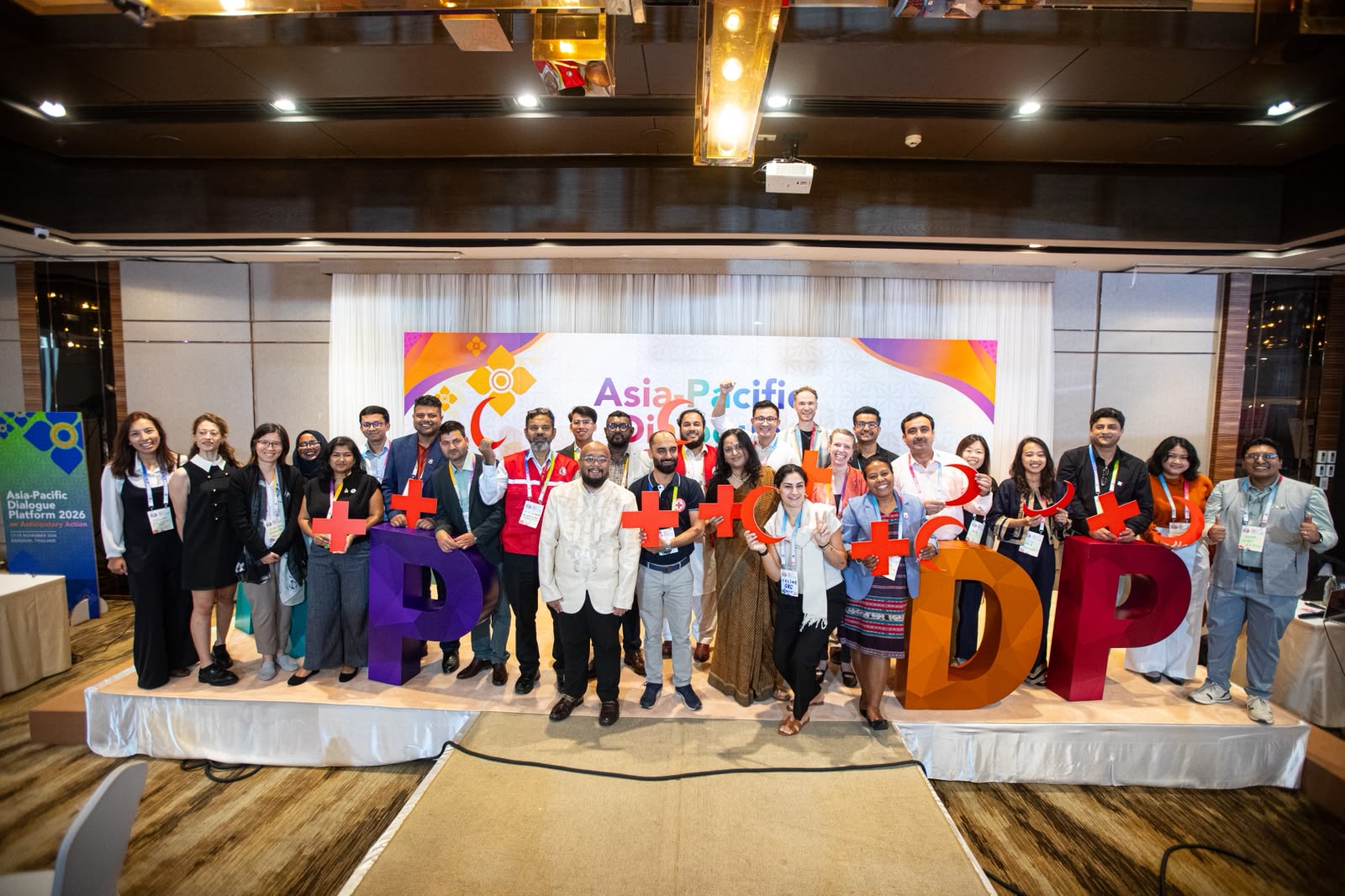
The Platform was a reminder of what the Maldives can achieve when its institutions work together. Early warning and anticipatory action rest on many hands: those who forecast and communicate risk, those who coordinate nationally, those who prepare communities, and those who connect it all to policy and finance. Taking part as one delegation, and sharing that work with a region facing similar questions, brought new connections and ideas that MRC hopes to carry into the national effort, from learning how other countries are harmonising forecasts, triggers and financing to exchanging experience with National Societies across the Movement. MRC looks forward to continuing to work with national and regional partners to strengthen early warning and bring early action to communities across the Maldives.
MRC extends its special thanks to the Anticipation Hub for facilitating the Maldives’ participation, and to the Red Cross Red Crescent Climate Centre for supporting the delegation. Our thanks also go to the National Disaster Management Authority, the Maldives Meteorological Service and the Ministry of Climate Change, Environment and Energy for travelling and working together, and for the shared commitment that sits behind this work. We also thank the organisers and all the participating countries and organisations for the openness with which experience was shared.