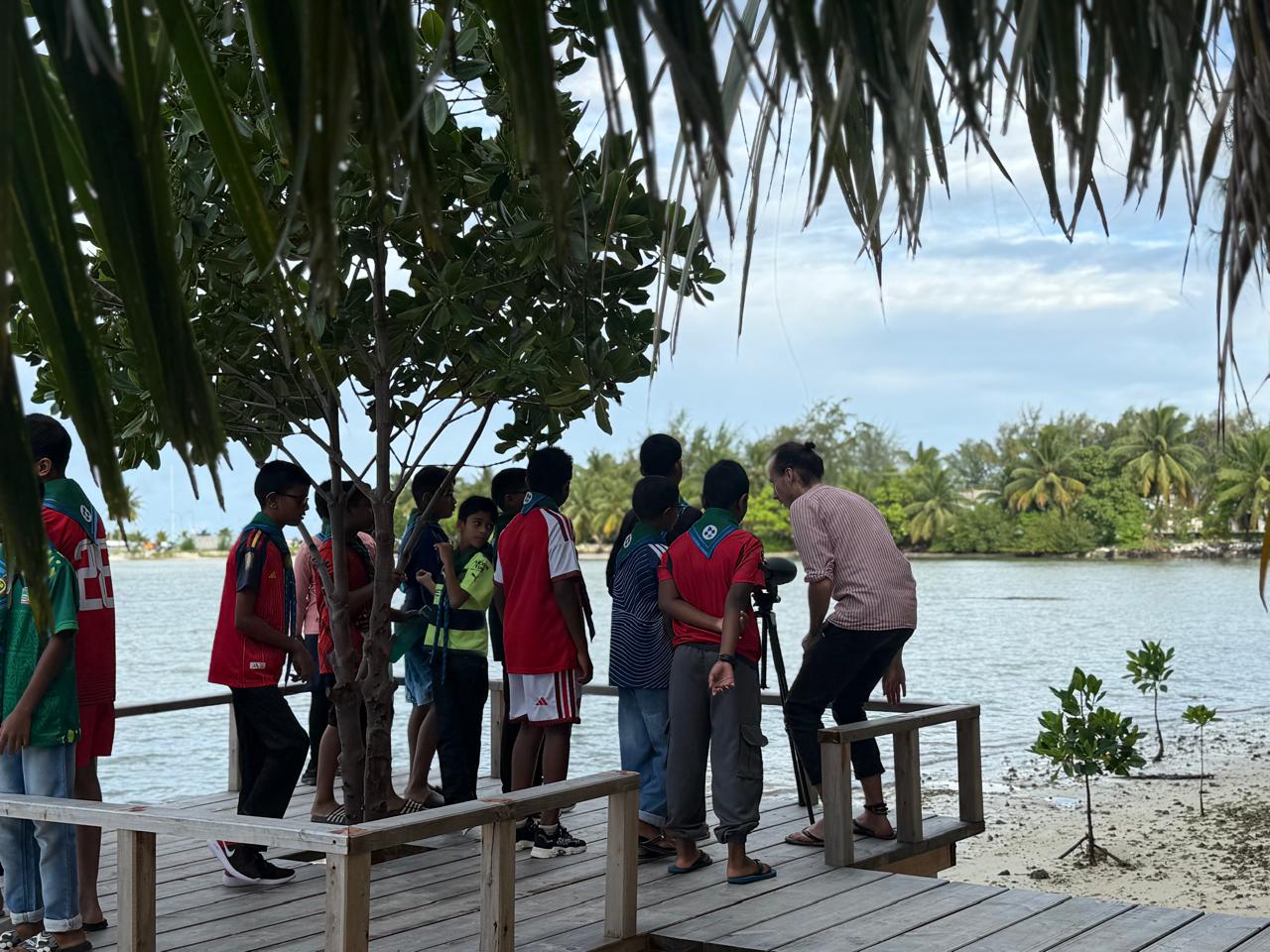
In November 2026, MRC brought "Dhooni Vaahaka" to Addu City in partnership with the Environmental Regulation Authority (ERA), hosted by MRC’s Hithadhoo Unit. This series of community sessions on birds and bird conservation was first held in Kulhudhuffushi City in September 2025 as part of MRC’s Volunteer Development Programme, which creates opportunities for volunteers, students and community members to learn about environmental conservation, climate action and ecosystem restoration.
Dr Sebastian Steibl of the University of Auckland and field researcher Ifham Hassan Zareer joined once again as collaborators, as they did last year, guiding the field work, species identification and survey methods, and sharing the findings of the Protected Birds in the Maldives 2025 review prepared for ERA. This time, the programme went a step further, combining the community sessions with an introduction to citizen science, including how to observe, identify and record birds, so that community members and MRC volunteers can help promote bird conservation in their own communities.
Sessions in Addu Hulhudhoo and Addu Meedhoo
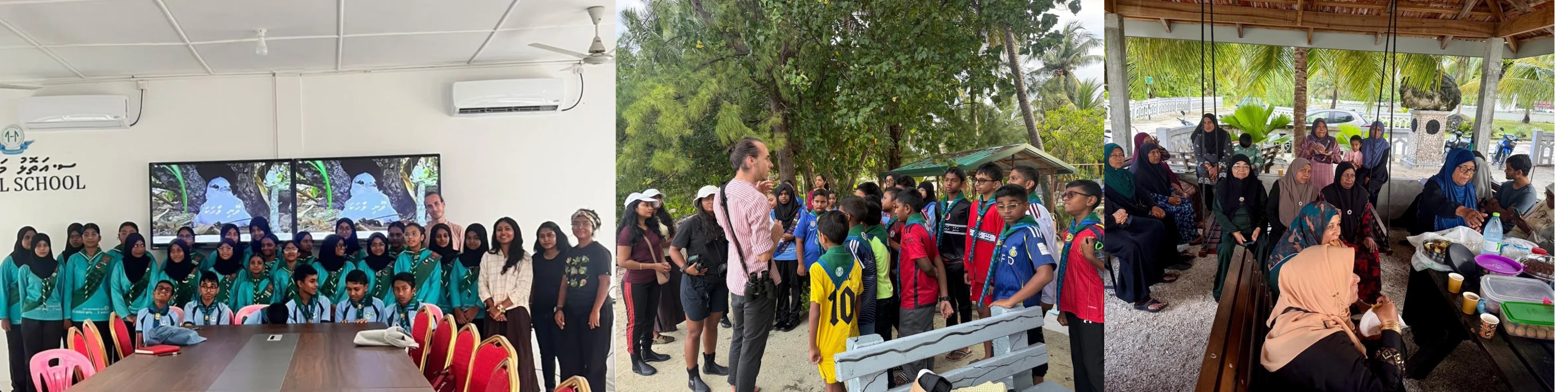
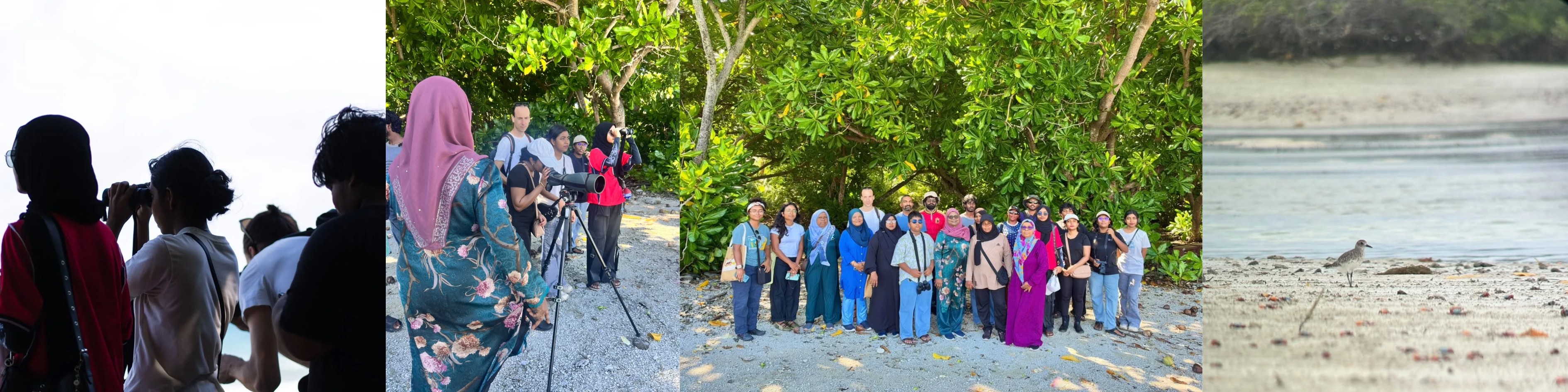
We began on 12 November in Addu Hulhudhoo and Addu Meedhoo, where we started the programme with a bird walk for participants. On the walk, scouts, girl guides and parents took turns with the binoculars and the spotting scope, looking closely at the birds around them. Games helped everyone tell one species from another, and about 50 participants left knowing the birds they had watched by name. That afternoon in Meedhoo, about 40 community participants gathered to share what they know about the birds of their island. Old Dhivehi songs that mention birds opened the conversation, bringing back memories of which birds people knew, where they had seen them, and how often they see them today. Along the way, participants also learned a little more about the birds themselves, including how some travel long distances across countries and oceans, and why islands such as theirs matter along the way.
Sessions in Hithadhoo, Addu Nature Park and Maradhoo School
Between 13 and 15 November, the programme continued in Hithadhoo and Maradhoo. On 13 November, 29 people joined a community session in Hithadhoo, where conversations about the birds people know and see around them led into citizen science, and how anyone can help by watching carefully, identifying what they see and recording it. The next morning, 20 participants joined a bird walk at Addu Nature Park, organised together with the park’s staff and joined by local CSO's, looking out over the park’s wetlands and green spaces through the binoculars and scope. We closed the programme on 15 November in Maradhoo, with a session held at Maradhoo school for Grade 3 and Grade 7 students. The students learned to recognise the birds that share their island, how to look closely and tell one species from another, and how some of these birds travel long distances across countries and oceans before reaching the Maldives. They also learned that birds can tell us about the health of the wetlands, mangroves and green spaces around them, and that anyone, young or old, can help look after them by noticing, identifying and recording what they see.
Beyond the Bird Walks: What Dhooni Vaahaka Showed Us in Addu City, Addu Hulhudhoo and Addu Meedhoo
Looking back on the four days, what stayed with us most was how closely birds are woven into Maldivian culture. Old Dhivehi songs that mention birds opened conversations about which birds participants knew, where they had seen them, and how often they see them today. For many, they were a reminder that the birds they have heard about since childhood share the same islands they live on.
That is where the learning moved in both directions. Dr Sebastian Steibl, Ifham Hassan Zareer and the ERA team brought science, survey methods and the findings of recent research, and the community brought its own knowledge, memories and songs, especially in Meedhoo, where the stories shared added a perspective no survey could capture. Across the five sessions and walks, the programme reached about 170 to 180 people in Hulhudhoo, Meedhoo, Hithadhoo and Maradhoo, from scouts, girl guides and school students to parents and community members who have known these birds all their lives.
Out of these conversations came a simple message: birds are an important indicator of the health of our biodiversity and ecosystems, and protecting them means protecting the places they depend on. The species present, where they rest and feed, and how their numbers change over time can tell a community a great deal about the wetlands, mangroves and green spaces around it. Participants left the sessions with a new understanding of the birds around them, and the simple techniques to identify and record what they see, the foundation of citizen science. Our aim is for these sessions to spark a lasting interest, so that more people in Addu take up the practice of observing and caring for their birds, and in doing so take the first step towards caring for their islands. MRC will continue to support such initiatives, linking them to its wider work in ecosystem restoration and the protection of the environment our communities depend on.
MRC extends its sincere thanks to Dr Sebastian Steibl of the University of Auckland and Ifham Hassan Zareer for once again sharing their knowledge and time, and to the Environmental Regulation Authority (ERA) for its partnership in bringing this series of sessions to Addu City. Addu Hulhudhoo and Addu Medhoo. Special thanks to Addu Nature Park. the CSO's across Addu City, Addu Hulhudhoo and Meedhoo for their active participation, Seenu Atoll School, Maradhoo School, MRC volunteers, and every participant who came to learn and to share.
More photos from our Dhooni Vaahaaka Sessions in Addu city, Addu Hulhudhoo & Addu Medhoo - here