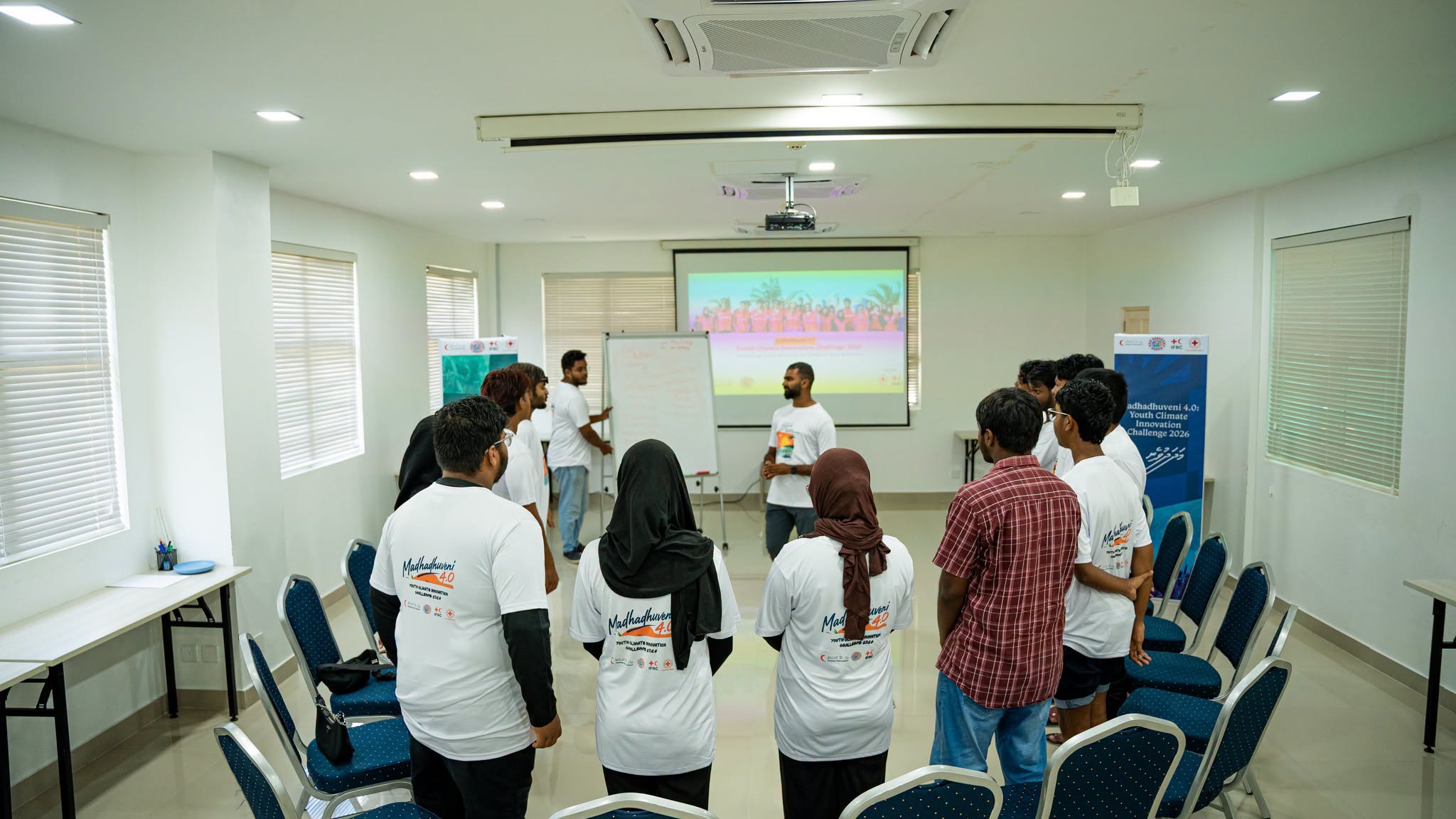
"Madhadhuveni" is the flagship volunteer engagement initiative of the MRC Kulhudhuffushi City Unit, welcoming and developing young volunteers since 2023. What began as a platform for youth engagement has grown with each edition building on the last .
Madhadhuveni 4.0 is an initiative of MRC's Youth Network led by the youth of the Kulhudhuffushi City Unit Youth Council and supported by the MRC National Youth Council to foster leadership, participation, and locally driven climate solutions. In its fourth edition, MRC brought Madhadhuveni together with its Youth-Led Urban Resilience and Climate Action Project, delivered in partnership with the International Federation of Red Cross and Red Crescent Societies (IFRC) and the Italian Red Cross, to create Madhadhuveni 4.0 – Youth Climate Innovation Challenge: a four-day residential camp that challenged young people aged 16 to 25 to turn their ideas into practical, community-based climate solutions for their own islands.
Four Days of Learning, Building, and Growing Together
The camp was designed as a progressive journey ,each day building deliberately on the one before, taking participants from connection through to action.
Day 1 opened with the Madhadhuveni "Badhahi" event, led by the Kulhudhuffushi City Unit Youth Council with support from the MRC National Youth Council. Participants came together for the first time, engaging in interactive games and team-building activities designed to build trust, create a welcoming environment, and form the bonds that would carry them through the days ahead. Peer-led from the start, Day 1 was about connection, bulding the foundation of everything that follows.
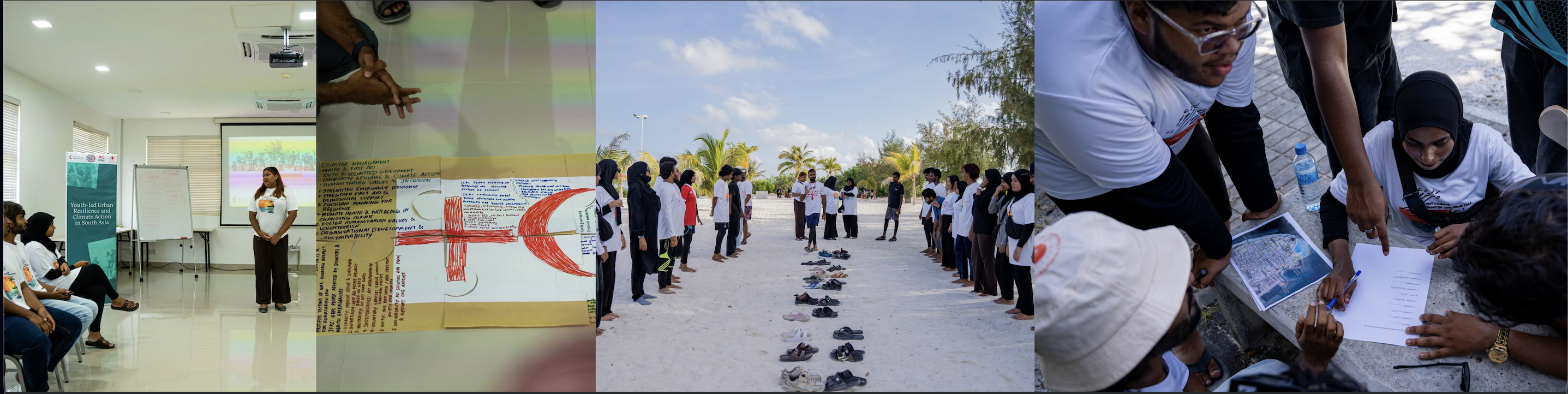
With relationships established, Day 2 shifted the focus to exploration and learning. Participants deepened their understanding of climate change and how youth-led local actions can help address its impacts. This was followed by sessions on the disaster management landscape of the Maldives, and expert led sessions on Protected Areas and Conservation Landscape, and Segregation and Waste Management. Each session, grounding participants in the local environmental context that would inform their project ideas.
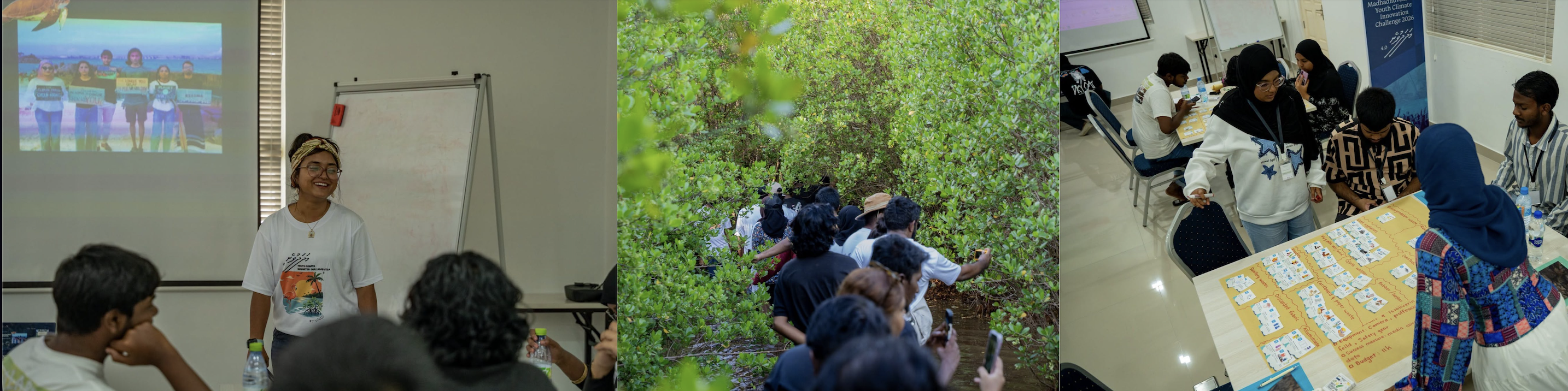
Beyond the classroom, participants and volunteers visited the Mashi Kulhi and Bodavaki Faa areas, learning about their ecological importance and recording multiple species to support citizen science efforts. By the end of Day 2, participants had the knowledge and the inspiration, to begin thinking about the problems they wanted to solve.
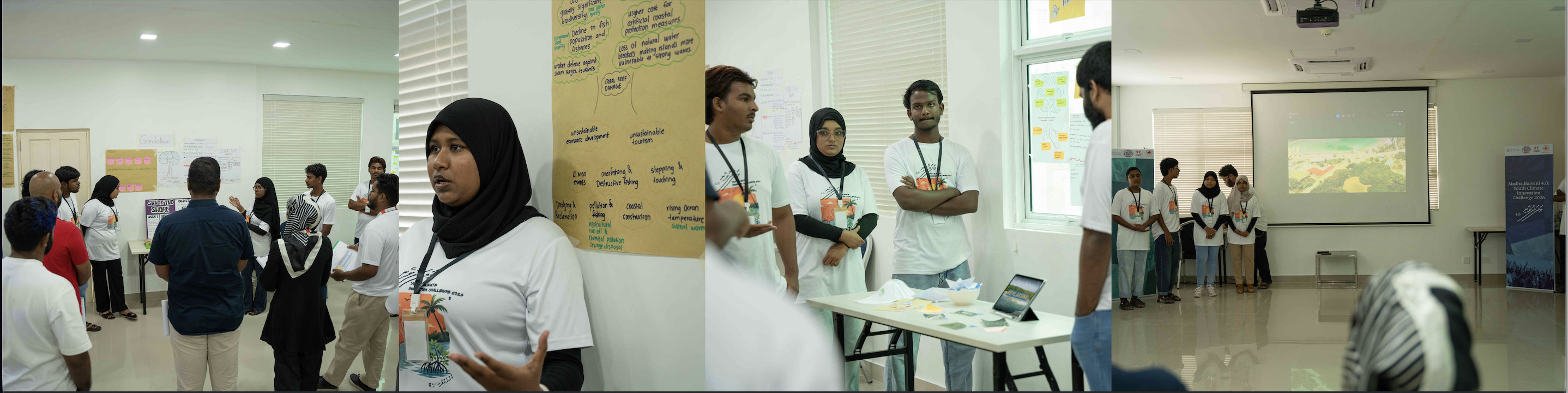
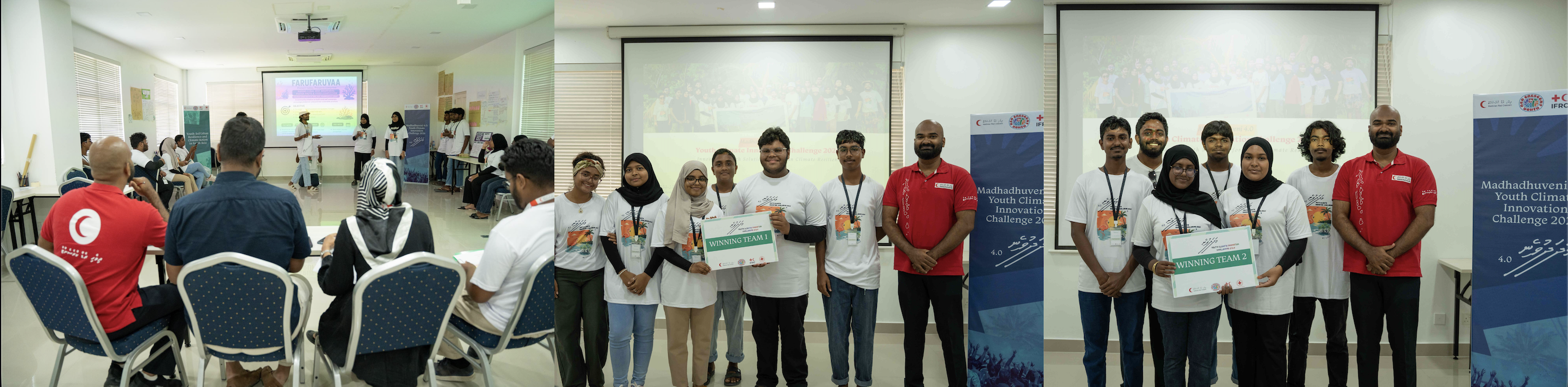
Days 3 and 4 put that knowledge to work. Participants moved into project design and ideation, defining the challenges they had identified, designing practical solutions, and planning how to deliver them in their communities. On Day 4 the final day of the camp, participants started the day with a visit to the Honihiru Bazaar, an iconic moment of community spirit in Kulhudhuffushi City, before teams presented their final project pitches to a judging panel. Four project pitches were made ranging from themes on creating awareness on biodiversity loss and protection, coral reef protection, field trips to protected sites, and heat action in the community. Each project, representing a locally grounded, participant-designed response to the climate challenges their islands face.
Outcomes and Impact
The post-camp survey results paint a compelling picture of what four days can achieve. Participants left with a strong understanding of climate and resilience, increased confidence in their skills, and an overwhelmingly positive experience of the camp, with mentorship engagement , peer collaboration, and locally grounded learning standing out as the moments that mattered most. Most significantly, every single participant indicated their intention to continue engaging in climate action in their own communities, reflecting a powerful reflection of what happens when young people are given the environment, the tools, and the trust to lead.
The survey also revealed that peer connection and teamwork ranked as highly as knowledge gains and practical skills, highlighting that the team-based model builds not just climate literacy, but the leadership, confidence, and relationships that sustain community action.
Looking Ahead
Madhadhuveni 4.0 is not the end, it is the beginning of that journey, with continued mentorship and support to ensure these ideas take root and create lasting impact in their communities.From the four projects pitched, two winning teams were selected and awarded grants to bring their ideas to life. MRC aims to continue the engagement with the winning teams through a dedicated implementation phase that will help turn their pitched concepts into real, community-run projects.
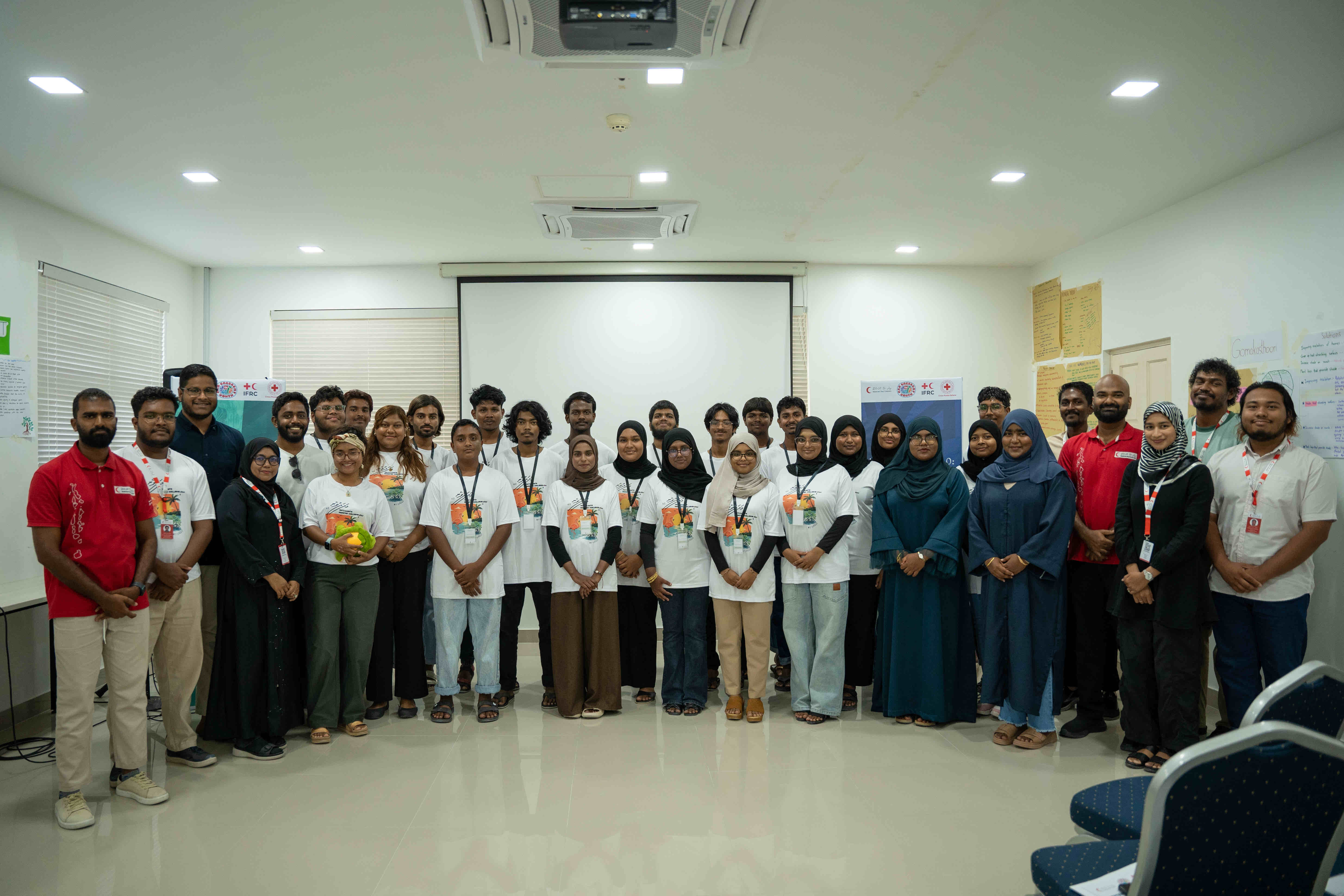
MRC thanks the IFRC and the Italian Red Cross for their partnership and support, the Kulhudhuffushi City Council and all expert partners and mentors who contributed to the camp, and most importantly, the 20 young people who arrived with ideas and energy.