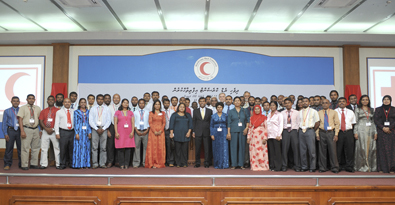
General Assembly
The supreme decision-making body of the Maldivian Red Crescent
The General Assembly is the highest authority of the Maldivian Red Crescent. It meets every two years and brings together elected representatives from Units across the Maldives to set the direction, policies, and priorities of the organization. Every major decision from electing leadership to approving strategic plans rests with the General Assembly.
The General Assembly has been central to MRC's governance since the organization's founding. The First General Assembly convened on 16 August 2009 in Malé, three months after the Maldivian Red Crescent Act was ratified, formally constituting MRC and electing its first Governing Board.
General Assembly At A glance
The General Assembly meets in ordinary session every two years, bringing together elected representatives from Units across the Maldives.
Every 2 Years
Ordinary session frequency
Up to 80
Representative seats from Units
51%
Quorum required to proceed
Before April
Deadline for when session must be held by
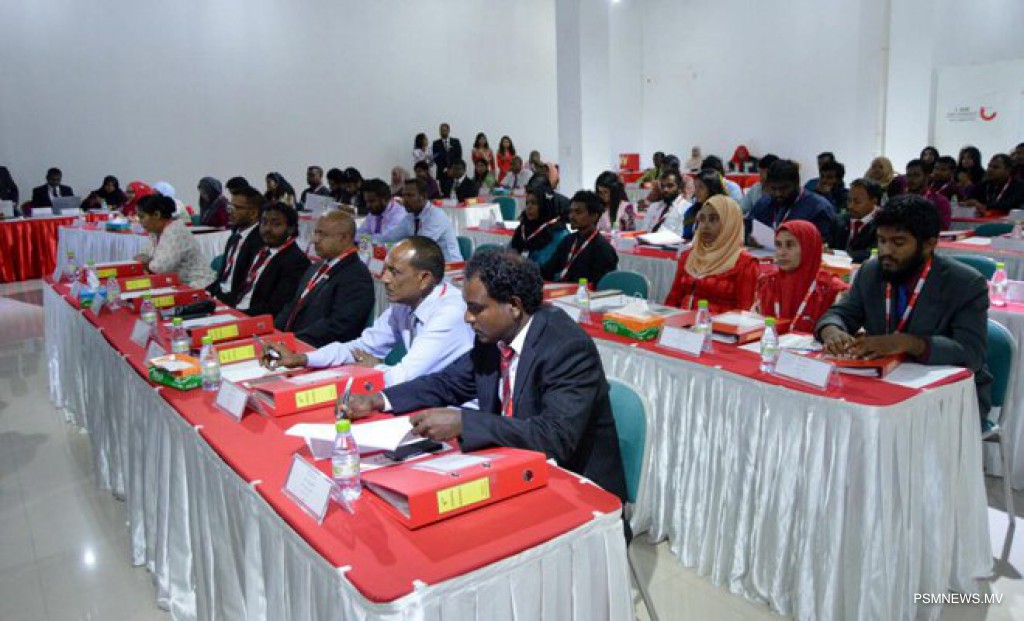
Functions
The General Assembly holds final authority over MRC's direction, finances, and leadership. It formulates the mission and policies that govern the organization, adopts the Strategic Plan, and approves the Annual Reports and audited financial accounts of the preceding two years. It elects all members of the Governing Board including the President, by secret ballot as well as the members of the Complaints Committee, and appoints MRC's external auditor. It also determines the registration and membership fees for Active Members, ensures the Statutes and internal regulations remain current, and evaluates the performance of the Governing Board through a full report presented at each session. A review of the Statutes must be included on the agenda at least once every four years.
The General Assembly is composed of elected Unit representatives and members of the Governing Board. Representation is distributed across all Administrative Atolls and Cities where Units have been recognized, using a formula set out in the Statutes.
Elected Unit representatives —
allocated across all Administrative Atolls and Cities with recognised Units, up to a maximum of 80 seats. Each atoll or city receives a minimum of two seats, with additional seats allocated proportionally to population.
Members of the Governing Board
participate as full members of the Assembly.
Observers
representatives of IFRC, ICRC, partner National Societies, government ministries, diplomatic corps, and NGOs may be invited. Observers do not vote.
Secretary General
attends in an ex officio capacity. May request the floor to make clarifications at any time.
Priority for Unit seats is given in the following order: - Unit Chairperson or Vice Chairperson - Youth members - Other Unit Board members - Other active members. No paid staff member of MRC may serve as a General Assembly representative.
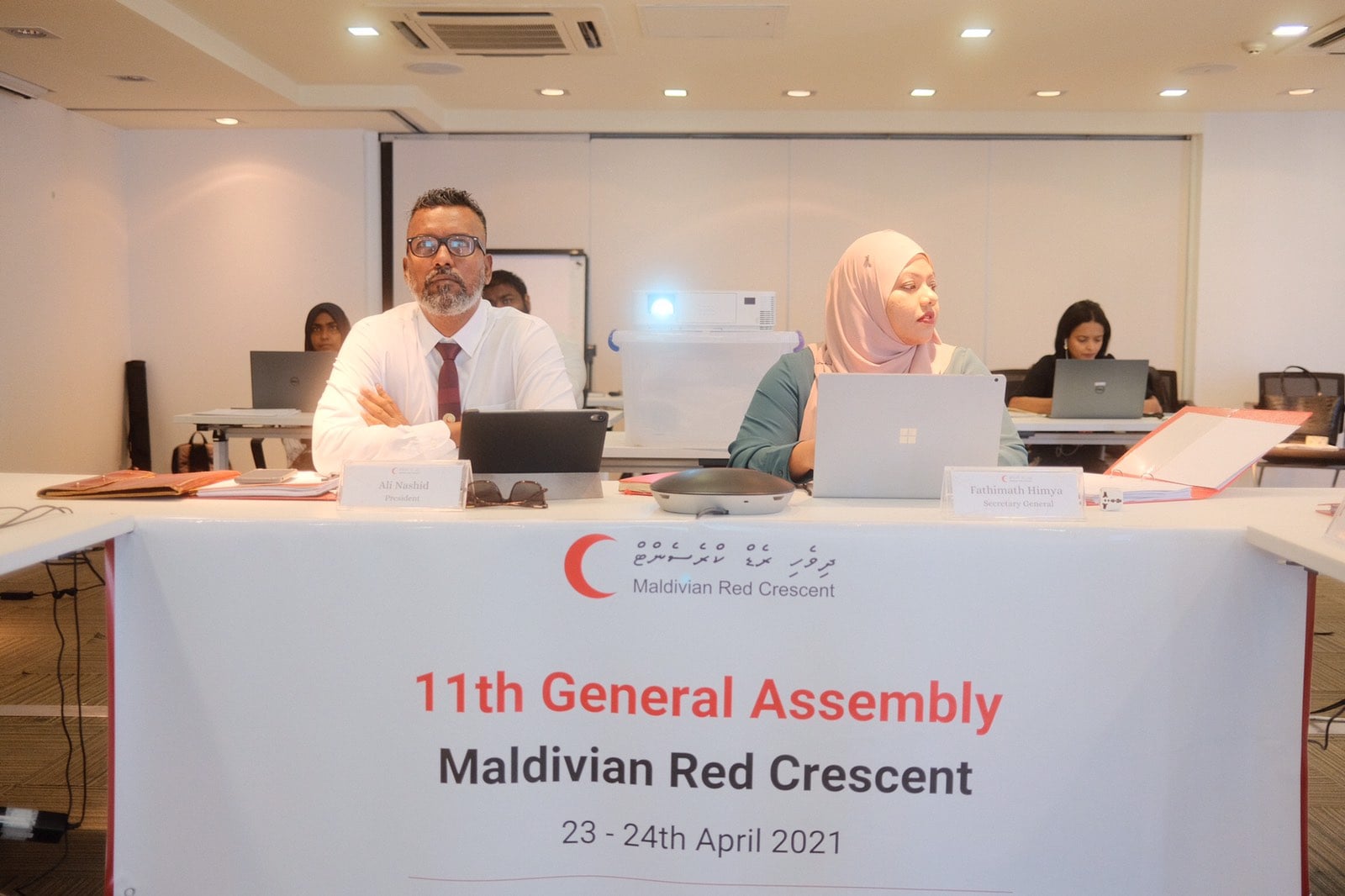
How it works
The General Assembly is chaired by the President of MRC. In the President's absence, a Vice President takes the Chair. Sessions are conducted in Dhivehi and English, the official working languages of MRC.
Before the session
30 Days before — preliminary notice
The Secretary General dispatches the preliminary notice and provisional agenda to all General Assembly representatives.
21 Days before — draft agenda circulated
The draft agenda is circulated to all representatives. Representatives may request additions to the agenda up to 14 days before the session.
14 Days before — final documents
Final documents, financial accounts, and audit reports are dispatched to representatives. The final agenda is circulated 10 days before the session.
Quorum and voting
The General Assembly requires a quorum of 51% of representatives to proceed. If quorum is not met within 30 minutes of the declared start time, the session is postponed. Each representative has one vote. In the event of a tie, the Chair holds a casting vote.
All resolutions are adopted by a show of hands unless the Assembly decides otherwise. Elections to the Governing Board and Complaints Committee are always conducted by secret ballot. A simple majority applies to most decisions; amendments to the Statutes require a two-thirds majority of representatives present and voting.
Minutes of each session are finalized within 60 days of the close of the session and sent to all representatives. They are formally adopted at the following General Assembly.
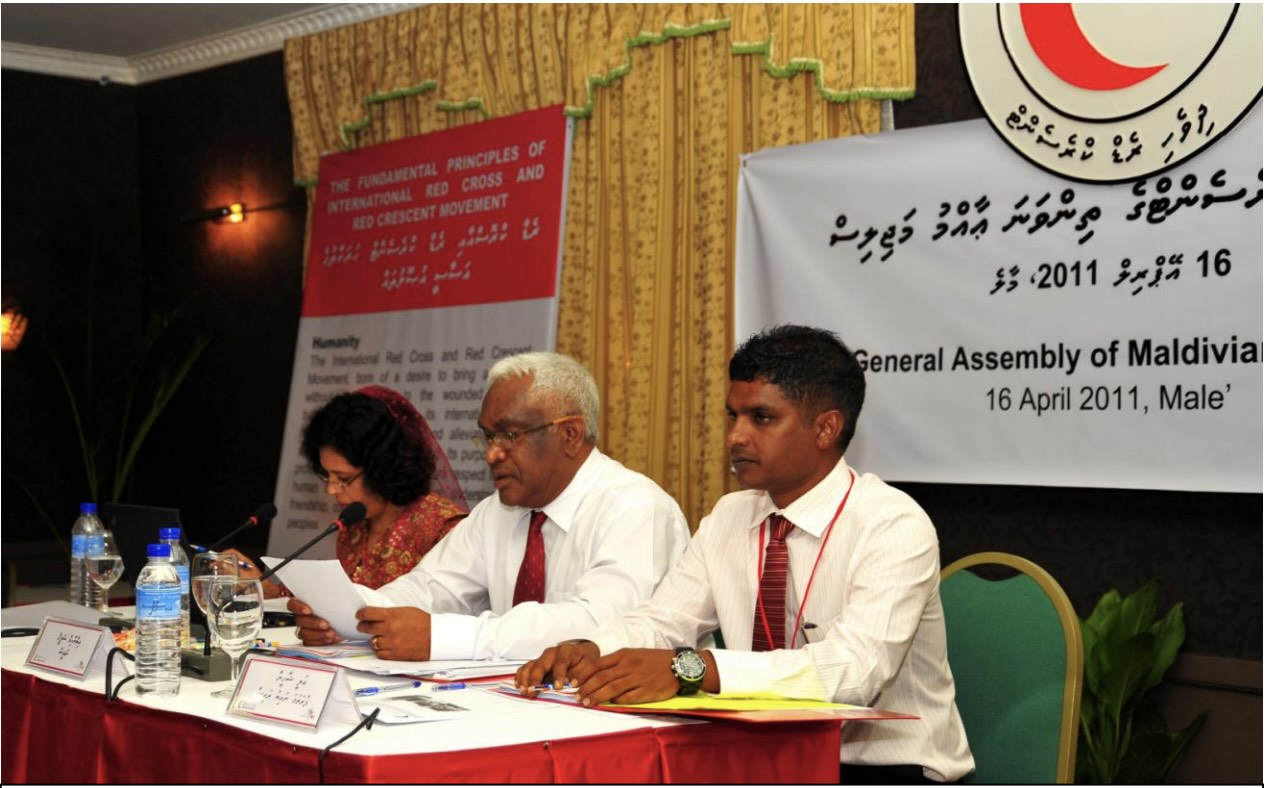
Extraordinary General Assembly
An Extraordinary General Assembly may be called at any time outside the ordinary two-year cycle when urgent matters require the Assembly's authority.
It follows the same rules on quorum, voting, and conduct as an ordinary session. Once a request is received, the Governing Board must convene the Extraordinary General Assembly within 20 calendar days. Representatives must be notified at least 14 days before the session, with the date, time, location, and agenda included in the notice. Minutes of all Extraordinary General Assemblies are adopted and filed at the next ordinary General Assembly.
Who can call one
The Governing Board, by decision
The President, with the support of at least three Governing Board members
One-third of the representatives of the most recent General Assembly, by written request
Once a request is received, the Governing Board must convene the Extraordinary General Assembly within 20 calendar days. Representatives must be notified at least 14 days before the session, with the date, time, location, and agenda included in the notice. Minutes of all Extraordinary General Assemblies are adopted and filed at the next ordinary General Assembly.